Optimizing Chess Openings for Restricted Environments
Up > the Topic
The Standard Scenario
In a typical development environment, we have ample computational resources and storage space. We can simply use standard chess engines alongside comprehensive, pre-existing opening books. In these cases, performance is high and the chess quality is excellent.
The Resource-Constrained Scenario
Challenges arise when resources are limited. Imagine a situation where the network is restricted, file system access is unavailable, or the environment cannot support a traditional database. In such cases, standard chess software fails to function.
While this might sound like a rare edge case, it is actually quite common in specific contexts:
- Simple JavaScript in browsers: Such as offline-first tutorials or lightweight web apps.
- 3D Scripting Environments: Many 3D engines have slow scripting runtimes and no native database support.
- Limited Languages: Environments that lack binary operators or complex data structures.
- Portability: When you simply want to ensure the first few moves are played correctly regardless of the host environment.
The Solution
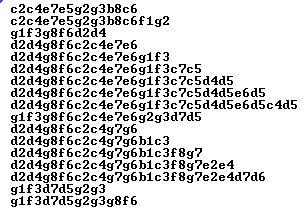
To overcome these hurdles, we can embed opening data directly into the source code. The goal is to create a compact function—ideally only a few kilobytes in size—that can generate the best moves for a given position on the fly.
There are two primary ways to store and generate these chess variants:
- As a Tree Structure: Mapping out every possible branch.
- As a Perimeter of Variants: Focusing only on the most frequently played, high-probability lines.

Structural Trade-offs
While tree structures feel like the natural choice for chess, they come with a "metadata tax." Every node and separator consumes space. In environments where binary operators are unavailable, this overhead can quickly exceed memory limits.

Although no compression method is perfect, the "perimeter" approach is highly effective. It allows the system to remain functional and accurate even for long, mainstream opening variations, keeping the code footprint minimal while maintaining high-quality play.